
AI Can Hit the Notes. It Still Needs Someone Who Can Play.
DAte
Category
AI
Reading Time
3min
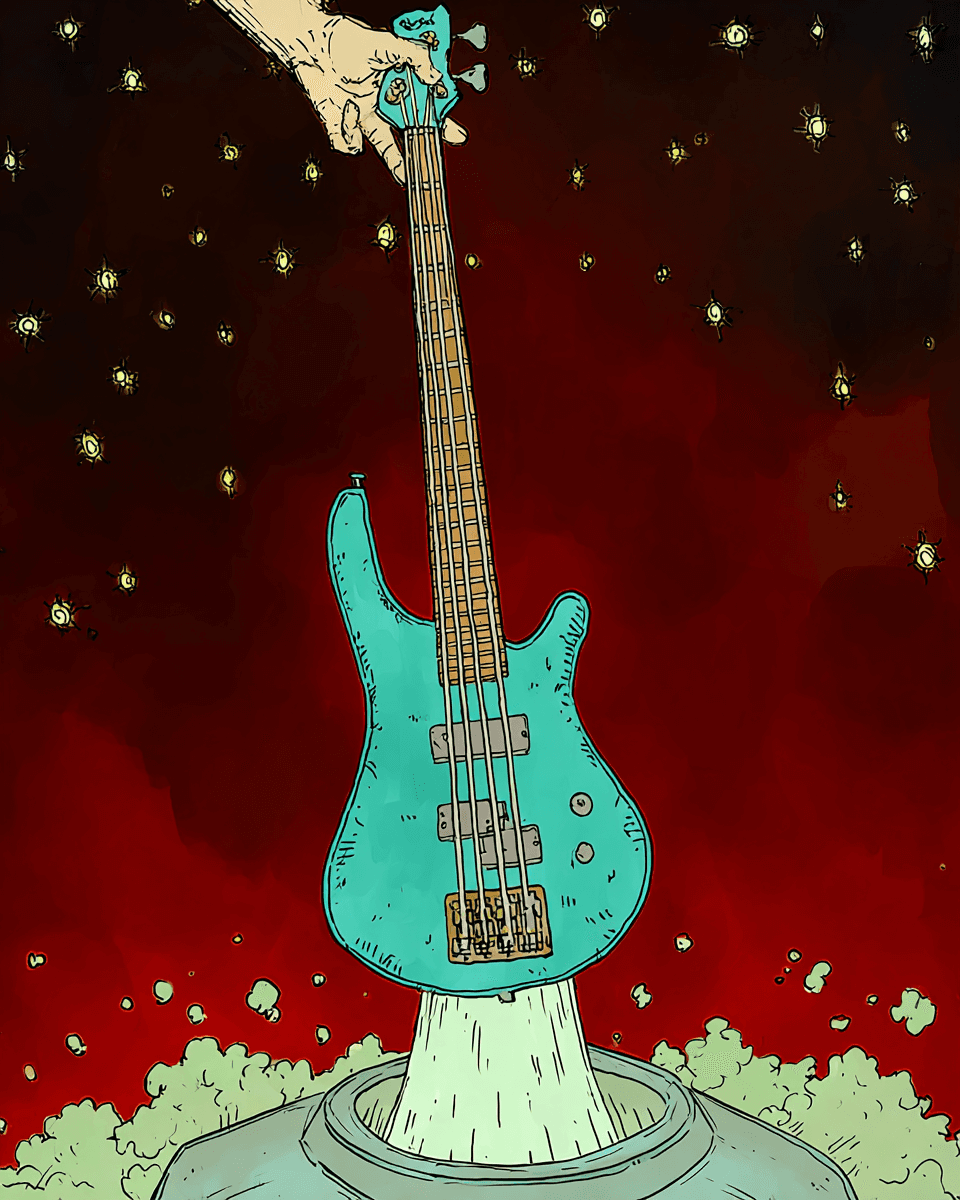
A while ago, I was asked to play bass in a Pixies cover band.
Technically, could I do it? Sure. I play guitar. I've been in a touring band for over 20 years. I understand music. I play guitar. I understand music. And I love The Pixies, so I practiced long enough to hit the notes. And with enough repetition, I white-knuckled through the sets without publicly embarrassing myself.
But I am not a bass player.
There is a big difference between hitting the notes and really playing the instrument. A real bass player understands the pocket, the restraint, the relationship to the drums, when to push, when to sit back, when the simplest line is actually the smartest line in the room.
That is how I think about AI and product work right now.
The biggest mistake companies are making with AI is confusing democratized production with democratized judgment.
AI can help almost anyone generate a screen, prototype, research plan, product brief, roadmap, or interface concept. That is useful. It is also dangerous when teams mistake the presence of an artifact for the presence of product thinking.
The thought work has not disappeared. It has moved.
The judgment that used to happen across discovery, strategy, design critique, research synthesis, technical tradeoffs, and product planning now needs to happen inside the AI workflow itself:
in the prompt
in the constraints
in the evaluation criteria
in the prototype review
in the decision about what is worth building at all
AI gives teams speed. It does not automatically give them depth, context, prioritization, user empathy, systems thinking, or business judgment. Those still have to come from somewhere.
A less experienced person might ask AI to “make a dashboard for customer support analytics” and get something that looks perfectly reasonable:
charts
filters
tables
status cards
a clean layout
But an experienced product thinker asks different questions before the screen exists:
What decision is this dashboard helping someone make?
What does the user already know?
What do they need to trust?
What should be summarized, escalated, hidden, delayed, or explained?
What are the failure states?
What behavior would prove this is working?
The difference is not whether AI was used. The difference is the quality of the judgment shaping the work.
That is the part many teams are underestimating. AI is a multiplier, and judgment is the number being multiplied.
If the judgment is shallow, AI makes shallow work faster.
If the judgment is strong, AI compresses the path from intent to artifact to evaluation.
This is where experienced UX, product, research, and technical thinking still matter, not as a ceremonial approval layer at the end, but as the operating system for using AI well.
The opportunity is not to remove thinking from product development. The opportunity is to move that thinking closer to the work.
Teams can prototype faster now, which is genuinely exciting. But faster prototyping does not mean planning is obsolete. It means planning has to become lighter, sharper, and more explicit.
You still need to know:
What problem you are actually solving.
Not just “we need a dashboard,” but what decision, behavior, friction, risk, or unmet need the product is meant to address.Who you are solving it for.
Not a generic “user,” but a real person in a real context with existing habits, constraints, motivations, anxieties, workarounds, and competing priorities.What assumptions are baked into the direction.
What are we assuming users understand? What are we assuming they want? What are we assuming they will trust? What are we assuming the business, data, or technology can support?Which constraints actually matter.
Technical constraints, business constraints, compliance constraints, brand constraints, accessibility constraints, data quality issues, edge cases, timeline pressure, and organizational realities all shape what “good” can be.What tradeoffs you are making.
Every product decision privileges something: speed over clarity, automation over control, simplicity over power, flexibility over consistency. AI can generate options, but it will not automatically know which tradeoff is right.How you will know whether the direction is working.
What user behavior would prove it? What signal would make you change course? What should be measured, tested, watched, or questioned after launch?
AI can help you hit the notes. Sometimes beautifully. Sometimes surprisingly well. But building a good product still requires someone who knows how to play the instrument.
The companies that will get the most out of AI will not be the ones that treat it like a replacement for product or ux judgment. They will be the ones that build better judgment into the AI workflow itself.
AI Can Hit the Notes. It Still Needs Someone Who Can Play. →
→

Yvonne Doll
AI Design Leader


